The Challenge
Critical Defects Hide Across Transaction Files
Execution errors, chain gaps, title exceptions, underwriting defects, and recording failures escape manual review because they surface only through cross-document validation.
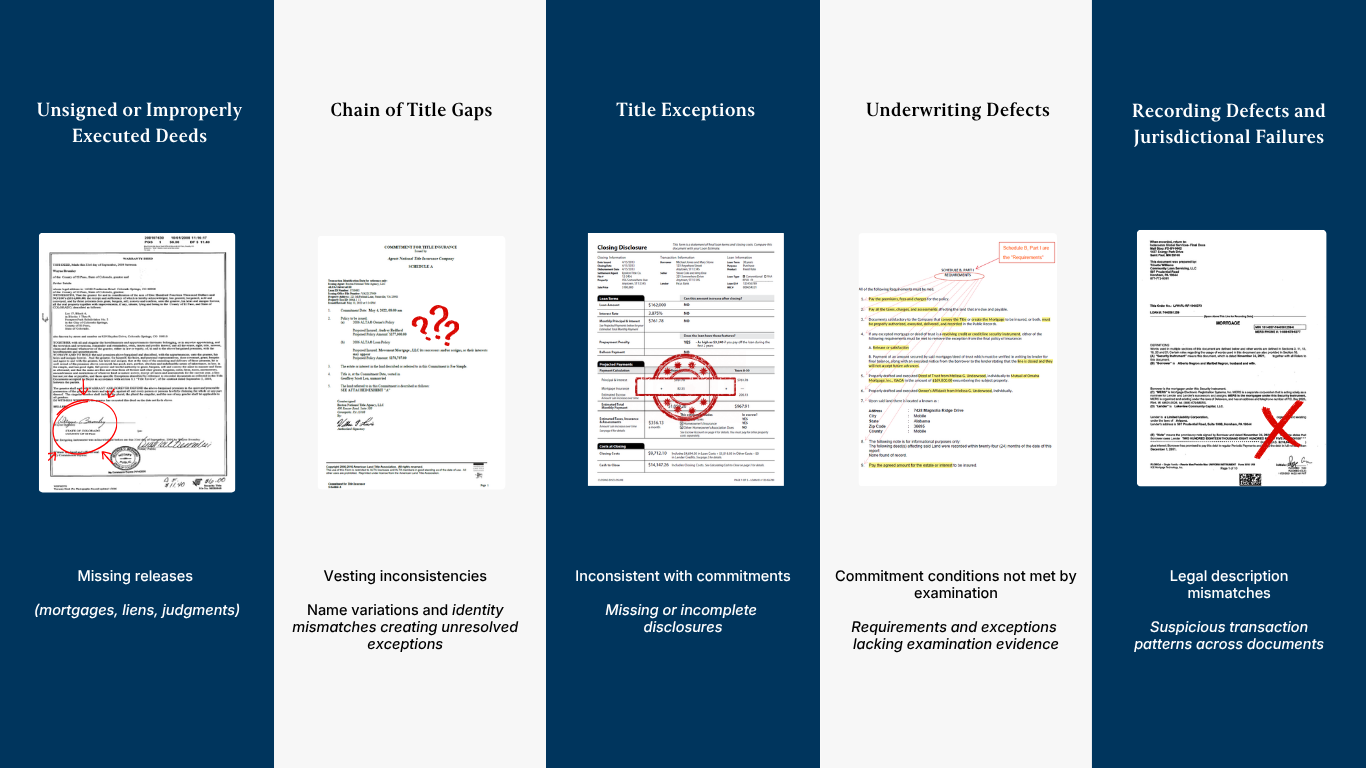
Cross-document validation reveals chain-of-title breaks, legal description mismatches, vesting inconsistencies, and fraud patterns that manual review misses.
Critical Defects Hide Across Transaction Files
Execution errors, chain gaps, title exceptions, underwriting defects, and recording failures escape manual review because they surface only through cross-document validation.
Single-document review catches individual errors but misses cross-document inconsistencies that only emerge when deeds, mortgages, title commitments, prior policies, and supporting documents are analyzed together.
Docmint validates closing packages before final policy issuance and identifies missing recording requirements, chain of title breaks, legal description errors, vesting inconsistencies, identity mismatches, and title exception gaps.
Examiners receive severity-ranked reports with document cross-references and remediation steps. Defects are resolved before recording to reduce E&O exposure and accelerate exception clearing.
Defects caught before recording. Lower E&O exposure. Faster exception resolution.
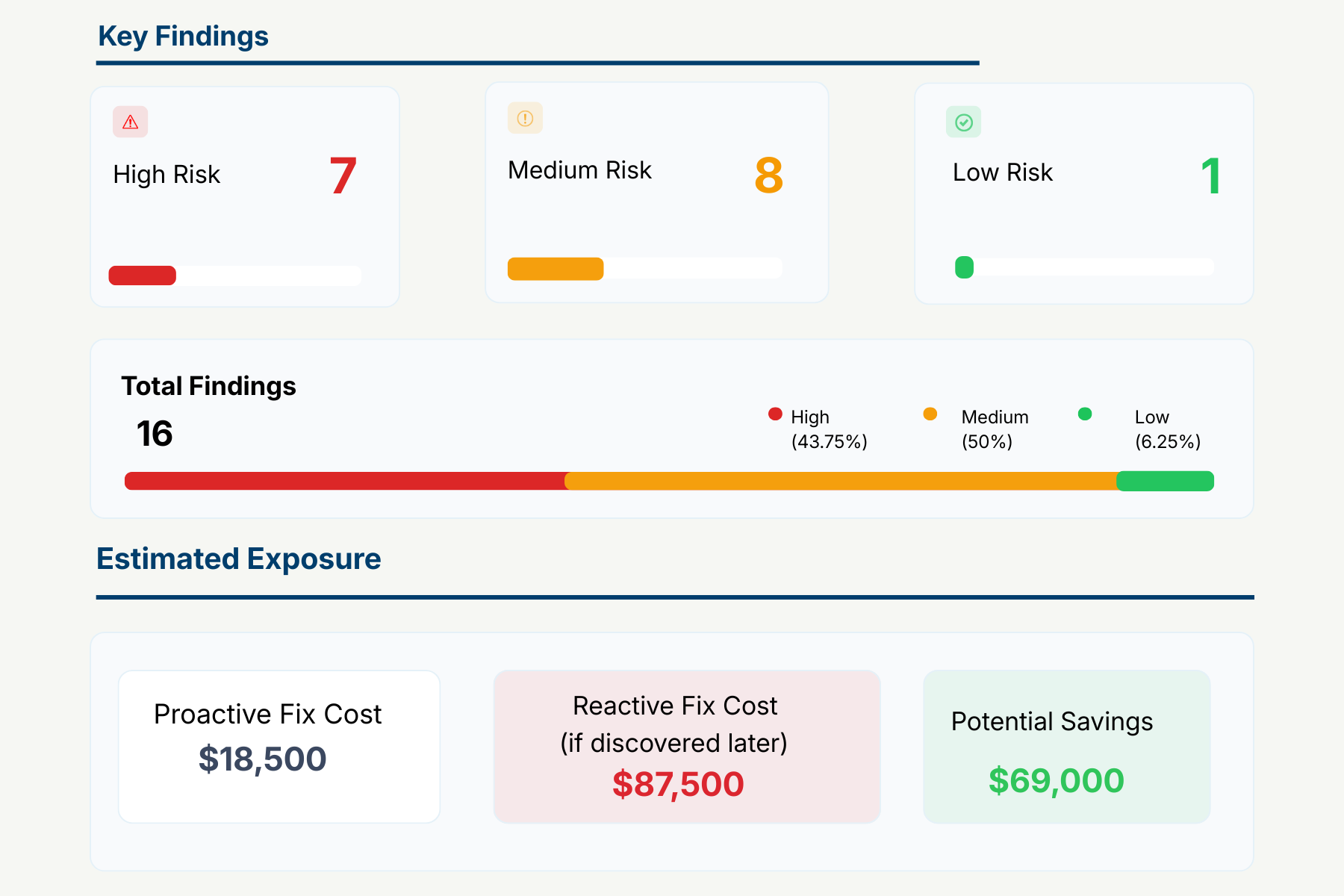
Docmint analyzes historical closing files to identify recording defects, title exceptions, and fraud patterns that escaped prior review.
Pattern analysis identifies which defects recur, concentration areas by transaction type or examiner, and the highest-exposure files. The remediation roadmap prioritizes exposure impact and prevention capability.
Portfolio exposure visibility. Targeted remediation. Recurring defect prevention.
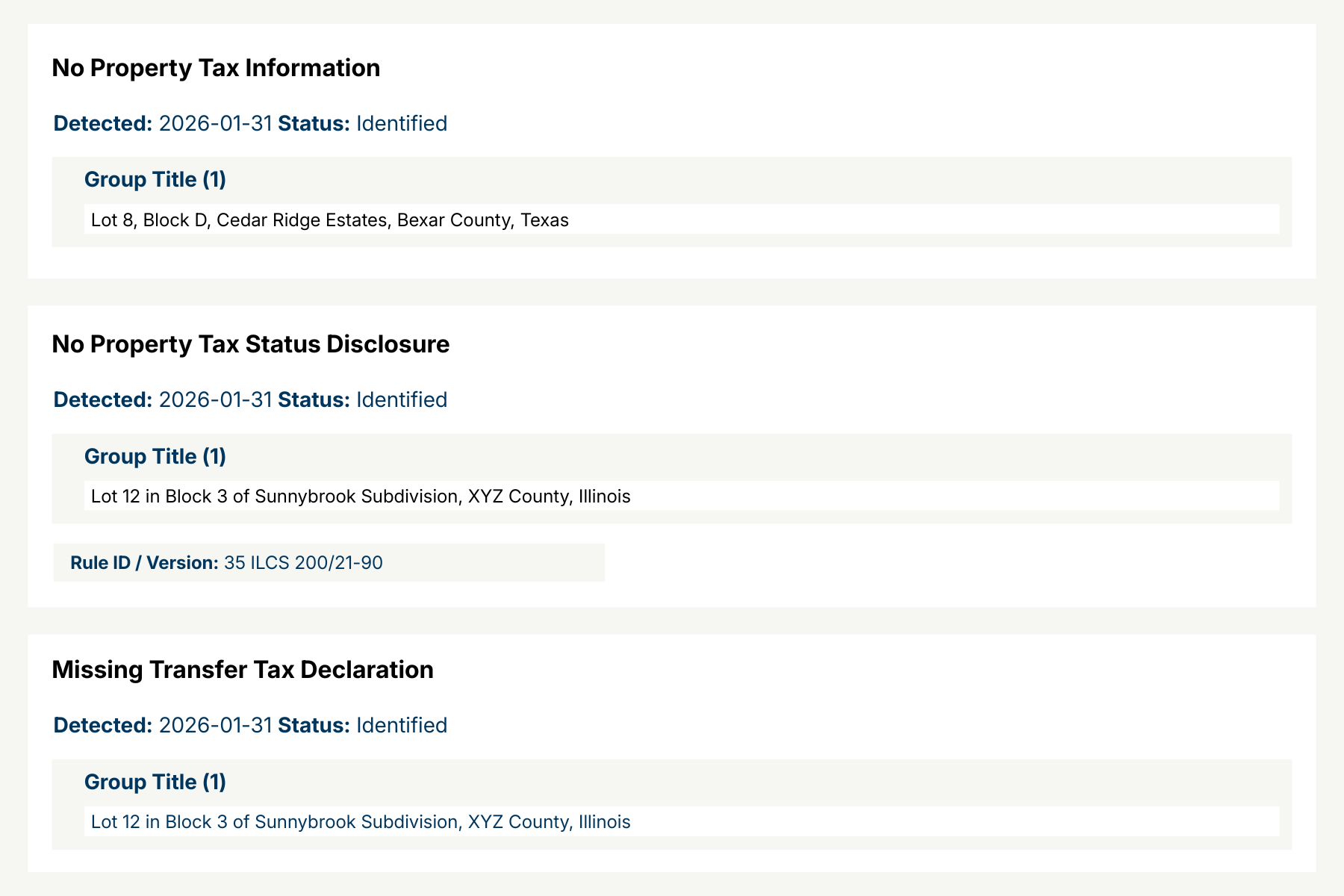
Validate transaction files from your portfolio to see how Docmint identifies recording defects and title exceptions.